The Best Creative Hobbies for a Busy Mind You’ll Actually Do
The brain buzzes nonstop, and your calendar looks like a Tetris game. Sound familiar? If you’ve got a busy mind, you don’t need a giant time commitment to spark creativity—you need hobbies that fit into the gaps, not carve out your entire week. Let’s dive into the best creative outlets that respect your schedule and still feed your spark.
Turnkeeping Time into Playtime: Quick Hit Creative Outlets

Do you need something you can start and finish in under an hour? You’re not alone. The trick is to pick hobbies that reward momentum—a tiny win here, a small project there, and boom, you’ve got creativity stacking up.
- Mini sketching sessions: 15–30 minutes, a single subject, done before you know it.
- Micro-writing sprints: a paragraph or two, no pressure to write The Great American Novel.
- DIY crafts with ready-made kits: think calligraphy, embroidery, or model building—books and kits streamline the start.
- Photo walks: grab your phone, shoot 10 scenes on the way to work or between Zoom calls.
Strong takeaway: small, repeatable wins beat big, intimidating projects any day when you’re busy.
Creative Hobbies That Fit a Busy Mind
You want something that scratches the itch without swallowing your evenings. Here are five options that tend to slide into hectic schedules quite nicely.
1) Visual Badassery: Quick Illustration and Doodling
Doodling doesn’t require expertise, and you don’t need an art studio to start. It’s basically mental floss for your brain.
- Daily 5-minute doodle routine: pick a theme, draw a quick version, share a scan or photo if you want feedback.
- One-line illustrations: capture a mood or scene in a single, bold line.
- Pattern journaling: fill a small page with repeating shapes; it’s oddly satisfying.
FYI, you’ll notice your eye for detail sharpens faster than you expect. And if you miss a day, no big deal—the page will be there tomorrow.
2) Soundtrack Your Life: The Joy of Short-Format Music & Sound
Music isn’t just for concert halls; it’s a tool for focus, mood, and memory. Even if you think you have two left feet, you can create small sonic experiments.
- Micro-compositions: 60–90 seconds of melody using a simple app.
- Field recordings: capture everyday sounds and stitch them into loops.
- Beat-making with loops: layer a few drum or bass lines and call it a day.
Why it fits busy minds: you finish with something audible, satisfying, and ready to reuse in videos or projects.
3) Words That Stick: Micro-Storytelling & Poetry
Words are miniature sculptures. You don’t need a week to chisel your craft—just a few minutes and a curious mind.
- One-page flash fiction: start with a single prompt and see where it goes.
- Six-word stories: yes, it’s a real thing, and it’s a surprisingly freeing constraint.
- Haiku or micro-poems: seasonal snapshots in three lines.
Pro tip: keep a notes app handy. Your best lines often arrive in the grocery line or during a boring meeting.
4) Hands-On Hobbies: Small-Scale Crafting
Crafting is the adult version of building a fort: satisfying, tangible, and portable.
- Embroidery or cross-stitch: it’s rhythmic, calming, and you can do it with one eye on your phone.
- Mini model kits: cars, airplanes, or fantasy miniatures—tiny worlds in tiny boxes.
- Soap or candle making: you get actual products you can use and show off.
Why it works when you’re squeezed for time: projects scale down to a single evening, and you still end up with something you can touch.
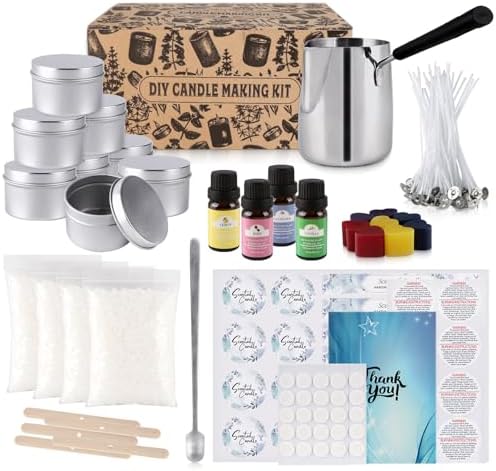
- 1. Complete and Convenient Kit This 480g DIY Candle Making kit is a one – stop solution for all your scented candle – ma…
- 2. High – Quality Materials The soywax included in the kit provides a reliable base for your candles, ensuring a smooth …
- 3. Stylish Silver Tins The kit features silver tins that not only serve as practical containers for your candles but als…
5) Digital Play: Short-Form Design & Coding Micro-Projects
If you live in the digital world already, you can make tiny but meaningful digital art or experiments.
- Icon design: create a set of five icons for a fictional app.
- Website micro-pages: design a one-page site about a hobby you love—no servers required at first.
- Interactive prompts: small coding tasks that respond to user input and teach you something new.
This lane is particularly friendly for busy minds because you can iterate quickly, measure progress with a few lines of code, and walk away when needed.
Deeper Dives: Making the Most of 20–40 Minute Windows
You’re not always sprinting; sometimes you’re pacing. Here are some strategies to maximize shorter windows without turning your hobby into a chore.

Graceful Constraints That Spark Creativity
– Use time-boxing: commit to a defined window (20–40 minutes) and stop when the timer goes off. No guilt, just momentum.
– Introduce a weekly theme: one week is monochrome art, the next is doodle-based storytelling. Constraints fuel focus.
– Create a “starter kit”: keep a ready-to-go set of supplies or files so you can start immediately.
Habit Stacking: Link Hobbies to Daily Routines
– Pair with daily routines: sketch during the commute (on paper or a tablet), write a micro-poem after lunch, or edit a short photo sequence during a coffee break.
– Use reminders that feel light: a sticky note that says “Create something today” on your monitor can nudge you without nagging.
Show, Not Tell: Sharing for Accountability
– Share small wins with friends or online communities. It’s not about praise; it’s about consistency and feedback.
– Create a tiny portfolio: a single gallery or notebook with your favorite pieces from the month. Seeing progress is incredibly motivating.
FAQ: Quick Answers for Busy Creatives
What if I have zero time and zero energy after work?
It helps to aim for tiny, non-committal sessions. Five minutes is enough to doodle a single shape or write a sentence. Small wins compound, and you’ll find energy returning when you see you’ve actually created something.
How do I choose which hobby to start?
Think about what you already enjoy in other areas of life. Do you like visuals, words, or hands-on activities? Start with a low-stakes option in that lane, and give it two weeks. If it sticks, you’ve found your rhythm.
Do I need expensive gear to be creative?
Nope. Many hobbies thrive on simple tools. A notebook, a basic set of colored pencils, a smartphone, or a modest kit will do. You can upgrade later if you love it enough to justify the spend.
How can I stay motivated without turning hobby time into guilt-ridden “must-do”?
Set gentle expectations. Schedule short sessions, not marathons. Celebrate small wins and remind yourself that this is play, not duty. Fun is the point.
Can I mix multiple hobbies in one sitting?
Absolutely. A quick doodle can fuse into a micro-story, or a photo walk can inspire a short poem. The cross-pollination keeps things fresh and exciting.
How often should I try new hobbies?
Give yourself a season (4–8 weeks) to explore a hobby before deciding if you want to keep it. Flexibility matters more than rigidity here.
Conclusion: Your Busy Mind Deserves a Creative Glow
If your calendar is booked tighter than your favorite jeans after Thanksgiving, you’re the perfect candidate for these bite-sized creative outlets. The goal isn’t perfection or big declarations of genius; it’s momentum, mood elevation, and a sense that you created something, even in a busy week. You don’t need a sabbatical to squeeze creativity into your life—just a few minutes, a dash of curiosity, and a willingness to try something small and new.
So, pick one of the hobbies above, block out a 20-minute window, and start. You’ll likely surprise yourself with how quickly your brain loosens up, how your day improves, and how much fun you can squeeze into a tiny pocket of time. Your future self will thank you for the tiny sparks you ignite today.