
How to Use the 12 Week Year for Powerful Goal Setting
The 12 Week Year isn’t a gimmick. It’s a practical bootcamp for your goals, wrapped in a timebox you actually stick to. If you’ve ever zigged and zagged with annual plans and felt washed out by Q4, this system hits differently. It cuts out the endless planning and puts momentum in your hands, now.
What the 12 Week Year actually Changes about Goal Setting
You’re not chasing a vague “success” anymore. You’re chasing concrete outcomes every 12 weeks. Think sharp focus, rapid feedback, and higher accountability. Sounds nice, but does it actually work? Yes, when you replace big ambitions with short, doable sprints. You’ll learn to say no to shiny distractions without guilt.
Start with a Clear Finish Line

The rule of thumb: pick a handful of goals, and define exactly what “done” looks like. Ambiguity sabotages effort, while clarity fuels momentum.
- Limit your goals to 3–5 top outcomes per 12 weeks. If it fits in a Tweet, it fits here.
- Make outcomes measurable with numbers, dates, or binary done/not done checks. “Improve sales” becomes “increase closed deals to 14 by Week 12.”
- Anchor them to real impact—what moves the needle for you or your customers?
Example finish lines to spark your imagination
- Launch a new product feature with 100 beta testers and 4 public case studies.
- Hit a personal fitness milestone and start a mindset routine you actually enjoy.
- Grow your freelance income by 25% through two steady retainer clients.
Translate Goals into a Weekly Rhythm
Here’s where the magic happens: you turn the finish line into a weekly plan you can actually execute. No more “someday” vibes.
- Identify 2–3 lead activities that reliably move you toward the finish line each week.
- Block time for those activities. Make it non‑negotiable, like a dentist appointment for your future self.
- Review brutally once a week. What’s working? What’s not? Adjust on the fly.
Lead activities that actually move the needle
- Customer interviews or beta feedback sessions.
- Prototype development or content creation tied to your outcome.
- Outreach and pipeline building with a clear next step for every contact.
Accountability isn’t punishment; it’s a buddy system

You don’t have to go it alone. Accountability helps you stay honest about what actually gets done.
- Find an accountability partner who cares about outcomes, not excuses.
- Use a simple cadence—weekly check-ins and a mid-cycle review.
- Share your finish lines publicly or with a small trusted circle to raise the stakes.
Accountability tools that won’t overwhelm you
- A shared Google Sheet with weekly progress bars.
- A lightweight journaling habit: one sentence about what moved the needle that week.
- A quick 5-minute Friday debrief: what worked, what didn’t, what’s next.
Keep it Lean: The Planning Ritual that Sticks
If your planning takes longer than your actual work, you’ll hate it fast. Keep it tight and practical.
- Quarterly planning session only; no monster roadmaps that look impressive on a whiteboard.
- Three-week sprints with a one-week buffer. Yes, you’ll thank the buffer when life happens.
- Transparent assumptions—write down what you’re assuming about aspects of the goal (customers, markets), and your own energy.
Sample planning rhythm
- Week 1–3: Nail the smallest, most impactful moves.
- Week 4: Review and reset with a sharper focus.
- Week 5–9: Execute at higher tempo; course-correct as needed.
- Week 10–12: Prepare for the next 12 weeks while preserving momentum.
Deeper Dive: Measuring Progress without getting Obsessed
You’re allowed to be data-driven without becoming a slave to the numbers. The goal is to stay oriented, not to micromanage every breath you take.
- Track leading indicators—the activities that predict results, not just the results themselves.
- Celebrate small wins—landing one feature, finishing a user interview, or simply showing up for your plan deserves a cheer.
- Course correction should be quick and concrete, not a year-long pivot.
Common pitfalls to dodge
- Overloading the 12 weeks with too many tasks
- Confusing activity with achievement (busyness ≠ progress)
- Waiting for the perfect plan to start
When to Adjust your Goals Mid-cycle
Sometimes reality throws a curveball and your plan needs a re-route. That’s not failure; that’s smart navigation.
- If you’re consistently missing two consecutive weeks, revisit your lead indicators and adjust.
- If the return on effort tanks, trim the scope and double down on the most impactful moves.
- If new opportunities emerge, consider a small, reversible shift rather than a wholesale overhaul.
How to reframe setbacks
- Recognize the setback as information, not doom.
- Ask what the data says about your assumptions.
- Reinstall momentum with a revised plan for the next 3–4 weeks.
FAQ
What makes the 12 Week Year different from a traditional quarterly plan?
In a traditional quarterly plan, you often melt into the habit of dragging out the same tasks. The 12 Week Year tightens the loop: shorter cycles, faster feedback, and clear finishes. It creates a sense of urgency that keeps you honest about what actually moves the needle.
How many goals should I set for a 12-week cycle?
Aim for 3–5 top outcomes. Fewer goals mean sharper focus; more goals dilute effort and dilute clarity. If it feels overwhelming, cut one or two and see how your energy responds.
Can I use this with a full-time job and personal projects?
Absolutely. The beauty is flexibility. You adapt the weekly rhythm to your schedule, whether you’re logging hours at work or juggling family duties. The key is to protect your lead activities and keep the finish lines in sight.
What if I miss a week or two?
Don’t panic. Review quickly, adjust your plan, and keep going. The momentum comes from regular check-ins, not perfection. FYI, a quick reset can save you weeks of drift later on.
Is the 12 Week Year compatible with digital tools?
Yes. Use calendars, task boards, or habit trackers—whatever helps you see progress at a glance. The tool should serve clarity, not create clutter. Minimalism usually beats an over-engineered setup.
Conclusion
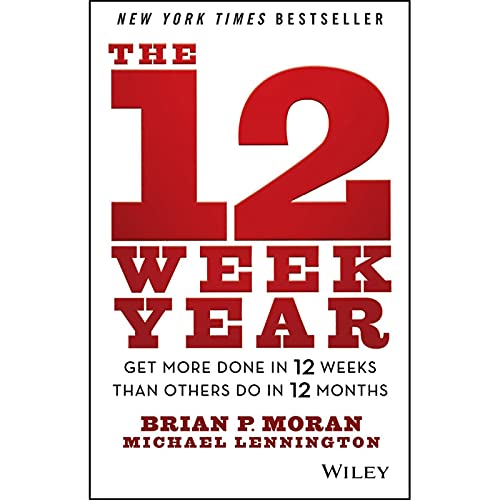
The 12 Week Year isn’t a magic wand; it’s a robust framework for turning big dreams into real outcomes with less fluff and more traction. You get clarity on what matters, a practical weekly rhythm, and accountability that sticks. Ready to test drive a 12-week sprint? Start by picking your 3–5 finish lines, map your first 2–3 lead activities, and commit to a weekly check-in. You’ll wonder how you ever survived without this approach. Momentum compounds quickly when you stop chasing perfect plans and start chasing real results.