
Self-Reflection Journaling: The Simple Daily Habit That Helps You Figure Yourself Out
Our website contains affiliate links. This means if you click and make a purchase, we may receive a small commission. Don’t worry, there’s no extra cost to you. It’s a simple way you can support our mission to bring you quality content. If you’d like more information please visit my Affiliate Disclosure.

Ever notice how life gets loud? Emails, responsibilities, random worries at 2 a.m. Suddenly your brain feels like 37 browser tabs opened at once.
That’s exactly why self-reflection journaling works so well. It gives your mind a place to unload, sort through thoughts, and actually hear what you’re thinking.
And no, journaling isn’t some mystical, candle-lit ritual. It’s literally you + a notebook + honest thoughts.
Sometimes messy. Sometimes brilliant. Sometimes just “Why am I like this?” repeated five times.
All of it counts.
Why Self-Reflection Journaling Works So Well
A journal works like a mirror for your brain.
When thoughts swirl around in your head, they feel overwhelming. Once you write them down, things start making sense. Patterns appear. Feelings become clearer. Decisions feel less chaotic.
You stop reacting to life and start understanding your own behavior.
And honestly? That’s where real growth begins.
Journaling Helps You:
-
Understand your emotions instead of bottling them up
-
Spot patterns in habits, reactions, and relationships
-
Clarify what actually matters to you
-
Make decisions with more confidence
When you flip through old entries, you often notice things like:
-
recurring frustrations
-
repeated goals you never acted on
-
moments where you felt happiest
Those patterns give you serious insight into your life.
And sometimes you’ll read an old entry and think,
“Wow… I really stressed about that?”
Perspective hits differently when time passes.
Journaling for Stress and Anxiety Relief
Stress sneaks up on you.
One minute you feel fine. The next minute your brain runs a mental to-do list, replaying conversations, worries, and random worst-case scenarios.
Journaling shuts down that mental chaos surprisingly fast.
When you write things down, you move thoughts out of your head and onto paper. That simple act alone can calm your nervous system.
Your journal becomes a judgment-free dumping ground for thoughts.
No filters. No expectations. Just honesty.
Sometimes I literally write:
“Everything feels chaotic today and I don’t know why.”
And somehow that still helps.
Self-Reflection Journal Prompts for Stress
If you feel stuck staring at a blank page (it happens), prompts help kickstart your thoughts.
Try these:
1. What currently stresses me out the most? Why?
Naming the problem often shrinks it.
2. What can I control right now? What can’t I control?
This question saves a lot of unnecessary mental energy.
3. What are three things I feel grateful for today?
Gratitude sounds cliché, but it actually shifts your brain toward calmer thinking.
4. What activities help me feel grounded?
Write them down so you remember to actually do them.
5. What advice would I give a friend feeling this way?
Funny enough, we give better advice to others than ourselves.
Pro tip: You don’t need perfect writing.
Messy thoughts count. Doodles count. Complaining absolutely counts.
Using Journaling to Design Your Future
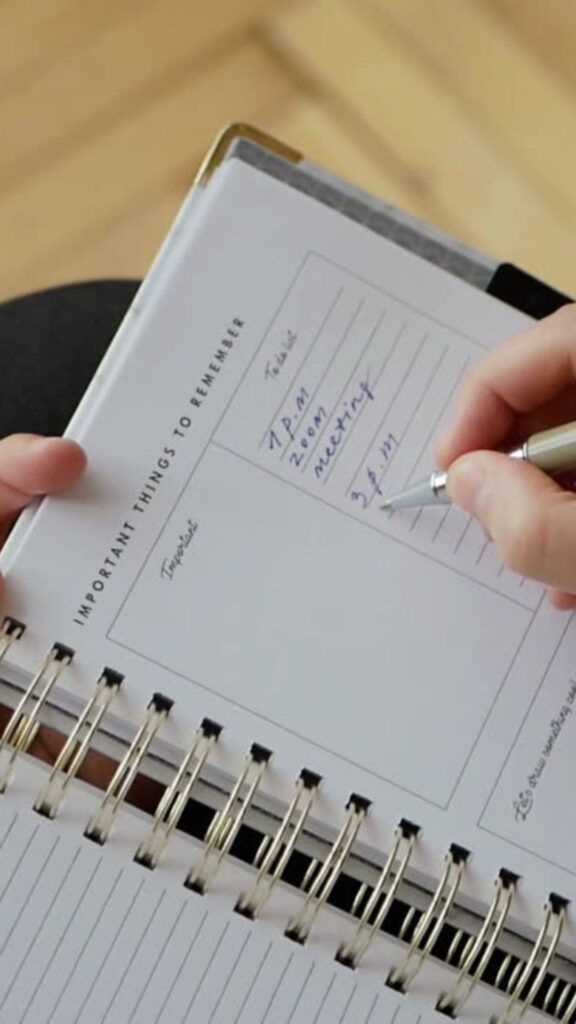
Most people have dreams floating around in their heads.
But thoughts alone rarely turn into action.
Writing them down changes the game.
Your journal becomes a blueprint for the life you want to build.
Instead of vague goals like “I want to feel happier,” you start creating clear, actionable ideas.
Think of journaling like a personal GPS for your goals.
Future-Focused Self-Reflection Prompts
If you want clarity about your direction, try answering these:
What does my ideal day look like?
Where are you? What fills your time?
What values matter most to me?
How do those values show up in my life right now?
What do I want people to remember me for?
Your answer reveals what matters most.
What would I pursue if fear didn’t exist?
This question usually exposes hidden dreams.
What small step could I take this week toward my future vision?
Tiny actions beat giant intentions every time.
Writing these answers helps you connect daily actions to long-term goals.
And when you revisit them regularly, you stay motivated instead of drifting.
Turning Journaling Into a Daily Habit
Let’s be honest.
New habits feel exciting for about three days. Then motivation disappears.
The trick with journaling? Make it easy and flexible.
You don’t need a perfect routine.
Try these simple approaches:
Easy Ways to Start a Journaling Habit
1. Pair it with something you already do
Morning coffee + journal = instant habit stack.
2. Keep sessions short
Five minutes works. Seriously.
3. Write before bed
Reflecting on the day helps clear your mind before sleep.
4. Change things up
You don’t always need paragraphs.
Try:
-
mind maps
-
quick bullet lists
-
doodles
-
pasted photos
-
random thoughts
Your journal should feel personal and low-pressure, not like homework.
The Hidden Benefit: Seeing Your Own Growth
One of the coolest parts of journaling?
Reading old entries.
You start noticing things like:
-
challenges you overcame
-
goals you achieved
-
mindset shifts you didn’t realize happened
It feels like having a conversation with your past self.
And sometimes that past version of you seems… slightly dramatic.
But that’s okay. Growth tends to look messy in the moment.
Final Thoughts: Start Small and Stay Honest
Self-reflection journaling doesn’t require talent, fancy notebooks, or perfect grammar.
It just requires honesty and a few quiet minutes.
Write what you feel.
>Write what confuses you.
>Write what excites you.
Over time, those small entries turn into a powerful record of your life, growth, and goals.
And honestly? Most people never give themselves that kind of clarity.
So grab a notebook and try it tonight.
Worst case scenario, you write three random sentences and move on with your day.
Best case scenario… you start understanding yourself in ways you never expected.
Not bad for a notebook and a pen. 🙂






One Comment