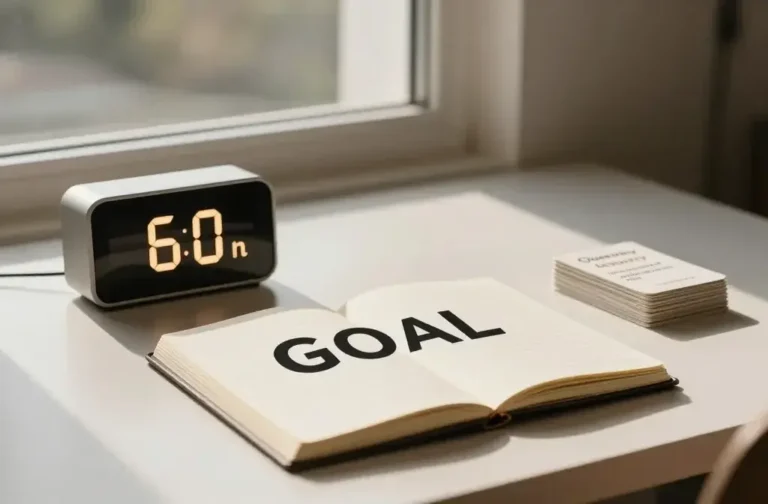
Goal Tracking Ideas to Stay Consistent
Here’s one of the most underrated secrets to actually reaching your goals: track them. It sounds almost too simple, but goal tracking is genuinely one of the most powerful things you can do to stay consistent. When you can see your progress, motivation stops being something you wait for and becomes something you build — one checked box at a time.
If you’ve ever set a beautiful goal and then quietly lost momentum by February, a tracking system might be exactly the missing piece. So pour something warm, let the cat curl up, and let’s find a goal tracking method you’ll actually stick with.
Why Goal Tracking Works (it’s Science)

This isn’t just productivity-guru advice — the research is remarkably clear. A major meta-analysis of 138 studies and nearly 20,000 people found that frequently monitoring your progress genuinely increases your chances of reaching your goals. And the effect was even stronger when people physically recorded their progress and when they made it public.
Why does it work so well? Tracking keeps your goal front of mind, gives you a hit of satisfaction every time you log a win, and shows you honestly whether you’re on track — so you can adjust before you drift. In short: what gets tracked gets done.
What to Actually Track
A quick but important tip: track the action, not just the outcome. You can’t control “lose weight” or “get promoted” day to day, but you can control “worked out today” or “sent one pitch.” Tracking your daily process — the systems that drive your goals — keeps you focused on what you can actually do, and the outcomes follow.
Goal Tracking Ideas to Try
There’s no one right method — the best tracker is the one you’ll actually use. Try one of these:
- The habit tracker grid. A simple grid where you color or check a box each day you complete your habit. Watching the streak grow is weirdly addictive (in the best way) — the classic “don’t break the chain.”
- A bullet journal. Beautiful and flexible — create custom trackers, logs, and check-ins by hand.
- A planner. Build tracking right into the planner you already use, alongside your schedule.
- A tracking app. Perfect if your phone is always with you — many send helpful reminders and show your streaks.
- A spreadsheet. Great for number-based goals like savings, reading, or workouts.
- A visual tracker. Color in a chart, fill a jar, or shade a “progress thermometer” — a satisfying, at-a-glance view of how far you’ve come.
- The calendar X method. Put a big X on the calendar every day you show up. Your only job becomes “don’t break the chain.”
- Weekly or monthly check-ins. A regular sit-down to review progress, celebrate wins, and adjust — pairs beautifully with a cozy Sunday reset.
- An accountability partner. Share your progress with a friend. Remember, the research showed tracking works even better when it’s made public.
How to Track your Goals Effectively
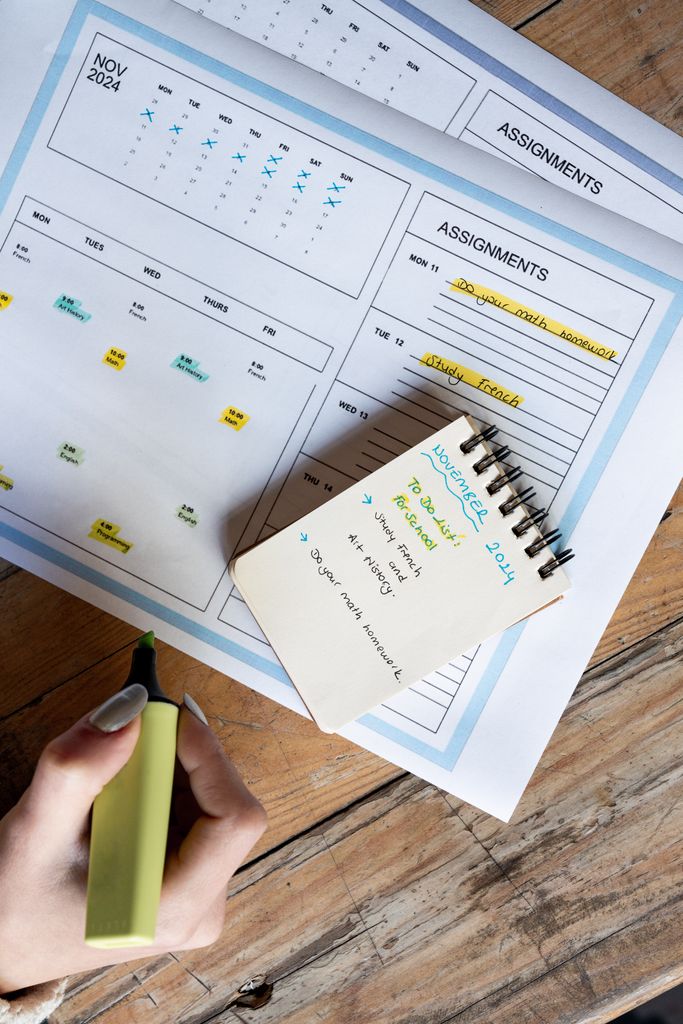
Any method works if you use it well. A few keys:
- Keep it visible. A tracker you never see can’t motivate you. Put it somewhere you’ll look daily — your fridge, your desk, your phone home screen.
- Make it easy. The simpler your tracker, the more likely you’ll keep it up. Don’t over-engineer it.
- Track daily (or close to it). Frequent monitoring is what the research found most powerful. A quick daily check-in beats an occasional deep review.
- Record it physically. Writing it down (or coloring it in) had a stronger effect than just thinking about it.
- Forgive the misses. A blank day isn’t failure — just fill in the next one. Never let one miss become two.
- Review and celebrate. Regularly look back at your progress and actually celebrate it. Seeing how far you’ve come is the best fuel to keep going.
What to Track, by Goal Type
Not sure what the daily “action” is for your goal? A few examples to make it concrete:
- Fitness goal → track each workout or walk, not the number on the scale.
- Money goal → track each time you save or every no-spend day, plus your running total.
- Reading goal → track pages or minutes read, not just “finished a book.”
- Habit goal → track each day you complete it (the streak is the point).
- Business or creative goal → track the inputs — pitches sent, words written, posts made.
- Wellbeing goal → track your daily practice, like journaling, water, or sleep.
Notice the pattern: you’re always tracking the small, repeatable action within your control. Stack up enough of those, and the outcome takes care of itself.
Common Goal Tracking Mistakes
- Tracking too many things. A tracker with fifteen habits is overwhelming and gets abandoned. Start with one to three.
- Only tracking outcomes. Track the daily action you control, not just the far-off result.
- Over-complicating it. A gorgeous, elaborate system you won’t maintain loses to a simple one you will.
- Quitting after a slip. One missed day undoes nothing. Consistency over perfection, always.
- Never reviewing it. Tracking without ever reflecting on the data misses half the benefit.
A Simple Goal Tracking System to Start Today

Feeling unsure where to begin? Keep it this easy:
- Choose one or two goals you’re focused on right now.
- Identify the daily action behind each (the system, not the outcome).
- Pick one tracker — a grid on paper, a note on your phone, whatever you’ll use.
- Check in daily and mark your progress.
- Review weekly, celebrate wins, and adjust.
That’s it. Simple, visible, consistent — exactly what makes tracking work.
Pair your tracker with your 2027 to do list and the full method in how to set goals and achieve them, and you’ve got everything you need to follow through.
Track it, and Watch Yourself Follow Through
Goal tracking is the quiet bridge between setting a goal and actually reaching it. It keeps your intentions visible, your motivation topped up, and your progress honest — which is exactly why the research shows it works so well. Choose a method you enjoy, keep it simple and visible, and let each little checkmark build your momentum.
How do you like to track your goals? Tell me your favorite method — or the one you’re trying this year.