
30 Whimsical Journal Prompts to Spark Creativity
Ready to supercharge your journaling sessions? These whimsical journal prompts are playful, surprising, and crafted to spark delight in every entry. You’ll finish with pages you actually want to reread.

1. Start with a Color You Love
Pick a color you’re obsessed with today and write a scene where that color is a character guiding you through a tiny adventure. The color can be a person, a place, or a mood—let it lead.
What makes this awesome? It trains your brain to see emotion and memory threaded through visuals. FYI, color-charged prompts tend to unlock surprising memories.
End note: This habit turns journaling into a daily ritual you genuinely enjoy.
2. Time-Travel Postcard
Imagine you’re sending a postcard from a moment in the past or future. Describe the landscape, sounds, and a single tiny detail that reveals a bigger story.
Why it rocks: it stretches your descriptive muscles without pressure. Seriously, you’ll surprise yourself with the detail you notice.
End note: Use this to spark short stories or to anchor a memory in vivid color.
3. The Spoonful of Sound
Describe a day as if every moment had a unique sound you can hear in your head. What does a “traffic moment” or a “quiet coffee corner” sound like?
Why it’s awesome: sound-oriented prompts train you to notice sensory details, not just visuals. Your future self will thank you for this soundtrack.
End note: Helpful for poetry, prose, and mindfulness exercises.
4. A Backpack of Tiny Wins
List five tiny wins you had yesterday, but turn each into a mini-story about a quest you accomplished with a goofy sidekick (could be a sock, a spoon, or a fantasy animal).
Why it shines: it reframes ordinary moments as adventures, boosting joy and motivation. It’s perfect for days that feel slow or dull.
End note: Great for a morning page to set a positive tone.
5. The Mysterious Door
Describe a door you come across in your day that isn’t obviously real. What does beyond-the-door look like, and who greets you on the other side?
Why it matters: doors symbolize opportunities. This prompt nudges you to imagine possibilities you might overlook.
End note: Use the imagination punch to brainstorm new projects or routes.
6. A Letter to Your Future Self
Write a letter to yourself five years from now. What do you hope you’ll remember about today? Include a tiny piece of advice you wish you’d followed earlier.
Why it’s cool: it creates a time capsule you can read later, offering perspective and encouragement. Trust me, you’ll smile rereading it.
End note: Great for reflective journaling and goal setting.
7. The Opposite Day Prompt
Describe a normal scene, but write it as if the opposite rule applies (day becomes night, calm becomes chaos). Keep the setting recognizable but inverted.
Why it’s awesome: it breaks habits of writing in a single mode and sparks originality. It’s a quick creativity sprint.
End note: Use this to loosen up before deeper prompts.
8. The Gratitude Grocery List
Create a grocery list, but each item stands for a person, moment, or feeling you’re grateful for. Briefly explain why each item matters.
Why it helps: gratitude becomes a storytelling framework, not a checklist. This nudges you toward positive journaling habits.
End note: Handy for weekly reflection and journaling momentum.
9. A Tiny Map of Your Day
Sketch a micro-map of your day with arrows showing where your energy rose or dipped. Describe one surprising stop along the way.
Why it’s useful: it converts time into tangible, navigable moments. Seriously, it clarifies where you want to spend energy next.
End note: Excellent for planning self-care pockets and routines.
10. The Cookbook of Emotions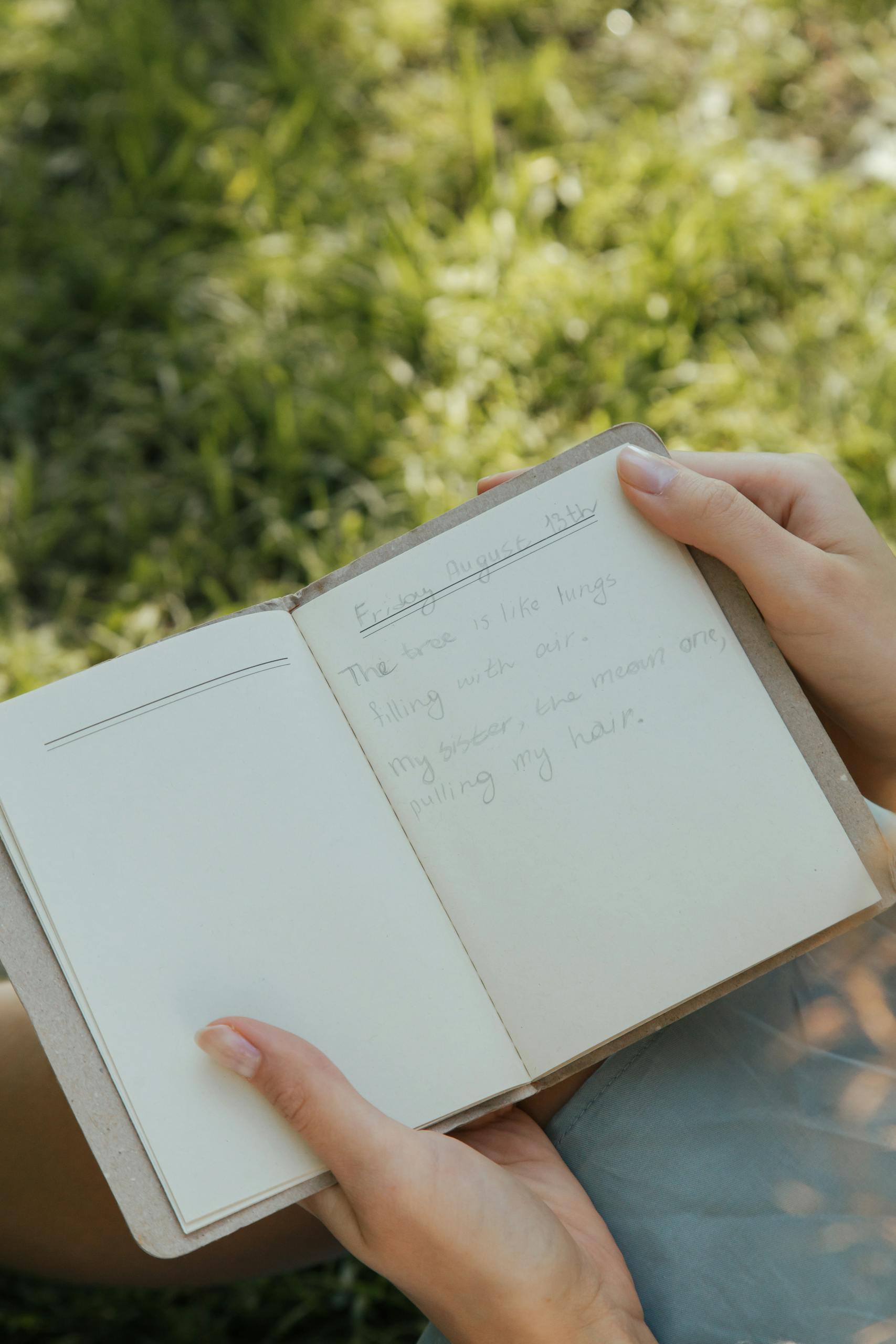
Invent a recipe for a feeling you experienced today. List ingredients (sounds, smells, memories) and steps to savor or release it.
Why it’s brilliant: it makes abstract emotions tangible and describable. This one sticks with you long after you close the notebook.
End note: Use to approach tricky days with playfulness.
11. A Day in the Life of a Favorite Object
Choose an object nearby and narrate a day in its “life.” What would it see, hear, and worry about?
Why it’s fun: personifying objects unlocks fresh perspectives and humor. Seriously, you’ll learn new angles on ordinary things.
End note: Great for quick, light writing bursts.
12. The Sky is a Screen
Imagine the sky broadcasting messages like a movie trailer. What are the headlines? What’s the teaser for tomorrow?
Why it works: it blends imagination with observation, sparking cinematic thinking. You’ll end up outlining a story arc with ease.
End note: Use for future scene ideas or daily inspiration.
13. A Letter from Your Inner Critic (But Nice)
Have your inner critic write a letter to you, but keep it constructive and kind. Then respond with your own positive, practical answer.
Why it helps: it defuses perfectionism and builds resilience. You’ll start noticing kinder inner dialogues.
End note: A gentle reset when perfectionism tries to hijack your page.
14. The Small Hero’s Ques
Write a micro-epic about a tiny hero (you or an object) saving an ordinary day from a trivial dilemma, like a missing sock or a stuck zipper.
Why it’s awesome: big feelings wrap around small, achievable stakes. This is ridiculously uplifting.
End note: Great for boosting confidence and humor.
15. Weather Report for Your Mood
Describe your mood as a weather system: what’s the forecast, wind direction, and any dramatic weather events that day?
Why it matters: it externalizes feelings as something you can predict, prepare for, or enjoy. This helps with mood tracking.
End note: Use in the morning to set intention or at night to reflect.
16. A Garden of Goals
Plant three goals as seeds. Describe their growth stages, the soil they need, and the little creatures that help them flourish.
Why it’s powerful: it visualizes progress and care, turning vague aims into nurturing acts. Seriously, the metaphor sticks.
End note: Helpful for weekly planning and motivation.
17. The Museum of You
Curate a tiny museum exhibit about your week. What artifacts would you display, and what would their labels say?
Why it’s cool: it reframes experiences as curated memories, making reflection playful and meaningful.
End note: A fun way to capture meaningful moments before they fade.
18. The Whispering Object Prompt
Choose a random object and pretend it can whisper advice. Write what it says and how you respond with action.
Why it’s great: it adds humor and practical guidance in a lighthearted way. You’ll smile at the sass.
End note: Use to spark action steps for a small project.
19. Rewind, Fast Forward
Write two short paragraphs: one rewinding a scene to show a contrasting outcome, the other fast-forwarding to a future version of the same moment.
Why it helps: it trains flexible thinking and narrative experimentation. It unlocks surprising what-ifs.
End note: A quick exercise when you feel stuck.
20. The Snack-Sized monologue
Deliver a three-minute-ish inner monologue about something you’re avoiding. Keep it honest, funny, and brief.
Why it matters: naming avoidance reduces anxiety and opens space for action. Brevity can be powerful.
End note: Perfect for a fast, cathartic write-in.

21. The Travel Diary of a Marker
If your favorite pen could travel, where would it go and who would it meet? Describe its journey in a short, vivid entry.
Why it’s fun: playful personification makes writing more approachable while keeping imagery strong.
End note: Wonderful for artful, visual journaling days.
22. A Misplaced Thought Rescue Mission
Write about a thought you misplaced this week and compose a tiny rescue mission to retrieve it. What clues lead you to it?
Why it works: it treats thoughts like loose pieces you can gather, not intruders you chase away.
End note: Helps with cognitive reset and focus.
23. The Persona Swap
Write a page as if you’re your most confident character from a book, movie, or a friend you admire. Then flip and switch back to your voice.
Why it’s cool: it borrows bold energy without pressure to imitate exactly. You’ll gain new phrasing and cadence.
End note: Use for voice development in future writing projects.
24. A Queue of Quiet Moments
List five quiet moments you might overlook—breathing, a window catching sunlight, a cup steaming. Describe each as if they’re small adventures.
Why it matters: small moments become valuable when you give them a stage. Seriously, stop rushing through them.
End note: Great for mindful journaling and slowing down intentionally.
25. The Soundtrack of Your Week
Craft a playlist-style prompt where each day shares a vibe, a motif, and a quick scene inspired by that mood.
Why it’s powerful: it ties music, memory, and narrative together, making journaling feel like a creative workout.
End note: A fun framework for weekly prompts and mood tracking.
26. The Tiny World Inside a Jar
Describe a tiny ecosystem floating inside a sealed jar that represents your current life. What creatures live there, and what happens when hope spills in?
Why it’s magical: it uses whimsy to explore resilience and balance. It’s oddly soothing.
End note: Use for metaphor-rich entries and imaginative thinking.
27. Post-It Confession Booth
Write a quick confession you’d leave on a post-it note for someone you admire, then reveal your real, kind version of that thought in your journal.
Why it matters: it merges honesty with kindness, reducing the fear around sharing feelings.
End note: Great for emotional clarity and gentle self-acceptance.
28. The Odd Superpower Prompt
Imagine you wake up with a quirky, useless superpower for a day. How would you navigate chores, chores, and more chores with this power?
Why it’s fun: it exercises humorous problem-solving and reframes daily tasks as adventure.
End note: A lighthearted way to boost mood and creativity.
29. A Room Tour in Metaphor
Give your current room a tour using lush metaphors. Describe colors, shapes, and textures as if you’re unveiling a new art exhibit.
Why it’s cool: metaphor-rich writing makes description vivid and memorable. This one sticks with you.
End note: Perfect for descriptive practice and creative energy.
30. The Goodbye Letter to Your Favorite Routine
Write a sincere goodbye letter to a routine you’re ready to release, then craft a short plan for a fresh, joyful replacement.
Why it matters: it acknowledges change with optimism and clarity. Letting go can open doors you didn’t know existed.
End note: End your session on a decisive, hopeful note.
Want more? Save these prompts as a rotating kit and pull one whenever you need a creativity nudge. You’ve got this—your journal is about to become your favorite sidekick.





One Comment